

It doesn’t take terribly long for me to find a visual artist that I appreciate. Seeing that I’ve got more comics than I can fit on my shelves, and shop frequently at thrift stores, flea markets, and toy conventions in further space-constricting hobbies, my eyes are always open and willing to spot something of interest. Heck, even a cereal box at the grocery store or a sign on the side of the highway could have design elements that make me think “that would look awesome on an album cover!”
I did a post in this style some time ago in an effort to learn if some of the impressive visual artists I’ve encountered over the years had ever worked in the music industry, with a particular focus on album covers. I’ve stockpiled several more of them since, and will share some that you may or may not be familiar with below.
Michael Herring
What Is He Known For?
My first known exposure to his work was his covers for the Oz series of books released by Del Ray.
I own a few science fiction paperbacks from the same publisher, but none of those covers stood out quite like these ones. The books take a completely different approach that feel natural to the stories within, remarkable considering the decades between the reimagined covers and the stories’ original publishing dates. They’ve got such a warmth to them that works complimentary to the internal illustrations by John R. Neill, a slightly different take on the characters without looking like a dated product of the 1970s or ’80s. I didn’t know they existed until buying my sister a bundle of them a few Christmases ago. Without thinking to look too deeply at my sister’s book before she had the opportunity, I thought the search for the cover artist would take some digging. Thankfully, there is a Wiki page for everything, including one to properly credit Herring.

Herring was quite prolific with a diverse portfolio. One place many others might recognize him from would be through his Lord of the Rings art. I’ve seen several other covers by him while book shopping, many of which were Mack Bolan (not to be confused for T Rex’s Marc Bolan) stories, such as this image titled “Heroin Needles” that looks as if Mack was prepping to do the world a solid and take out Harvey Weinstein. His tone can also be much darker and more eerie, such as on the cover for The Best of Fritz Leiber, and he’s also done more sensual imagery in romance-themed covers.
Has He Done Album Covers Before?
I’ve seen a number of musicians named Michael Herring in addition to a Mike Herring that did photography for the band Threshold, but I can’t determine if this particular visual artist ever worked in the realm of music. Given his extensive bibliography (which likely excludes some non-fantasy and sci-fi), how could he have time for anything else?
What Style of Music?
Well, if I hired Herring to produce an album cover, his style could front a wide variety of music covers. As I was drawn to his Oz work first, I’m thinking something that could be accessible to younger listening audiences. Not necessarily artists that aim directly at kids like Fred Penner or Sharon, Lois, and Bram, but not too far removed. I think of singer/songwriters in folk/acoustic rock in the vein of Cat Stevens, Joni Mitchell, Nick Drake, or Carole King could do well with such storybook-type images. Having an interest in expanding my tastes to their modern-day counterparts, I wonder if Herring’s art could still have a fit. On that note, I just learned that Fred Penner’s daughter is a musician! Hayley Jean Penner, on top of her own material, has written songs for The Chicks among others. That’s the type of music I’m thinking of, light and melodic.
Gary Ciccarelli

What Is He Known For?
Toy, food, and various other advertisements and media from the 1980s and 1990s. A better question would be to ask what isn’t he known for? Are you as crazy about Michael Keaton’s Batman as most older millennials are? Gary’s been there. How about those McDonald’s characters that helped drive families to fast food by the hundreds of millions? Gary’s done that. Oddly drawn to those Camel cigarettes ads despite never wanting to take up smoking? That’s more of Gary’s work. I just bought a talking Magneto X-Men figure at a toy convention in April, and it turns out to be his packaging art that made the mutant so menacing!
Much of his art is featured on his site YourIllustratedChildhood.com as well as the Instagram account of the same name, where he proves with frequency that he is truly “The Man Who Illustrated Your Childhood”. He also hosted an exhibit of his work in 2019 at Henry Ford College titled “Fantasy to Reality”.
Has He Done Album Covers Before?
He’s dabbled. Here’s one of his works on the cover of Inphasion by Papa John Creach.
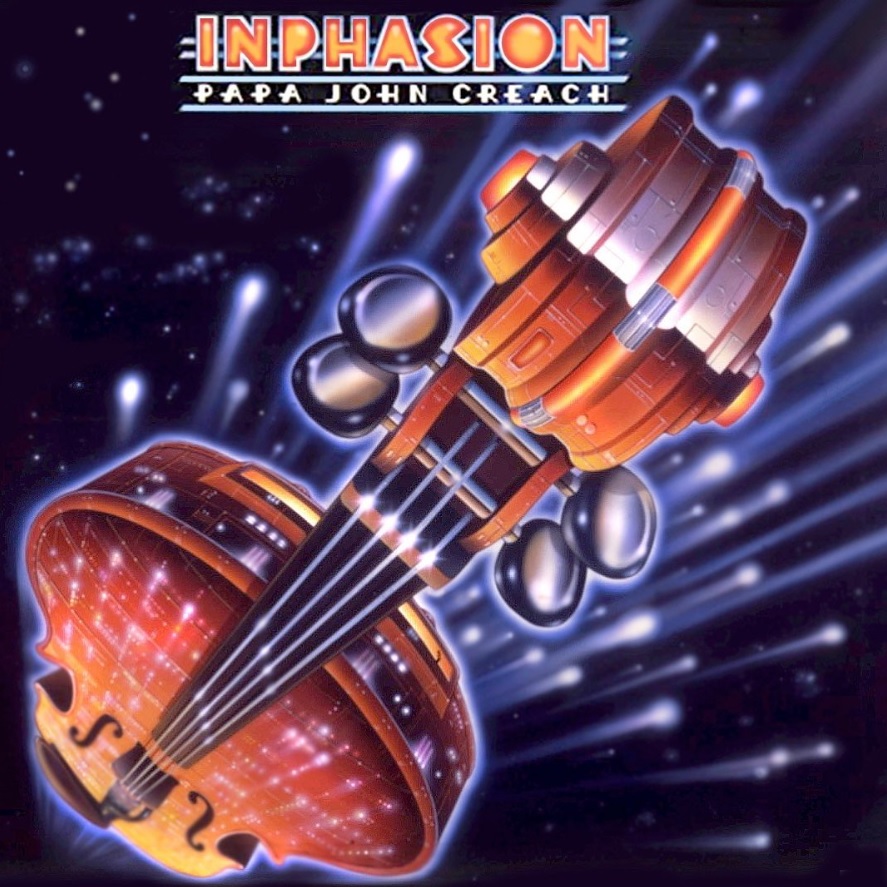
Despite largely being a commercial illustrator, the brand of music Papa John Creach performed is typically not music that the masses consume, particularly in the days of disco. Still, this art does a fine job to motivate shoppers to purchase it, with a violin blasting at warp speed through the universe like the USS Enterprise. The beams of light reflecting off the body of the instrument does wonders to extend the viewer’s scope of space as well. Aside from this, one of his festival poster designs made its way onto the cover of the Montreux/Detroit Collection featuring the music of The Charles Boles Quintet and Roy Brooks and The Artistic Truth. Expanding further into Gary’s music ties, other notable non-album work of his includes this White Stripes illustration, a Coca-Cola/Disney Studios ad with the New Kids on The Block, and Cheap Trick’s band-issued Christmas cards.
What Style of Music?
If I was performing music somewhere in the punk sphere, I would definitely consider inquiring about Mr. Ciccarelli. With all those childhood connections unveiled, my mind jumps to styles of music from my ‘90s kid and teen-aged days. Maybe music with a pop-punk sort of vibe, or a high-energy skater-brand of punk, something that hits that certain sound that I identify with the 1990s and early 2000s. Blink-182 or NOFX types that wear their senses of humour on their sleeves, perhaps making art depicting the band parodying Joe Camel and selling smokes to kids, playing a more violent type of laser tag, or strangling each other with Sega Genesis controller cables in a fit of gamer rage.
Hector Garrido

What Is He Known For?
G.I. Joe box art for their Hasbro toy lines of the 1980s.
Kids play with action figures these days, right? Though I wasn’t very connected to G.I. Joe franchise as a child, I always admired them from afar, obtaining various items from the franchise as I got older. There are, in fact, lots of different artists that I could have pulled from the G.I. Joe family to feature here. I quite enjoy reading the Marvel Comics of G.I. Joe, with writer Larry Hama and other authors and illustrators making sure the stories were faithful to the cartoon. Still, I chose Garrido because there’s just something so effective about the way the card backings look. These toys flew, no, exploded off the shelves, each with their own distinct look. Part of the salesmanship should go to the box art rather than to the toys themselves or the cartoon, displaying a member of the Joes (or Cobra and Cobra-affiliated baddies) in a heroic battle-pose with a red and yellow flash behind them to accent their bravery in the face of danger (not that they made a habit of killing off main characters). It’s not so far removed from the Ken Kelly (Kiss, Manowar) alpha-male ideal to put forth brave soldiers and evil foes. His art became such an iconic part of the franchise that the DVD box set from the G.I. Joe: A Real American Hero cartoon series uses various character illustrations from the toys on each of the discs.
As a sample, here’s the packaging showing Shipwreck (labelled as “Sailor”) looking a lot less like the comedian that he often portrayed on the show. Not laughing now, are you?
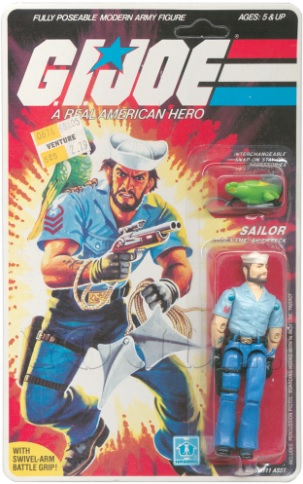
Garrido is also known as for illustrating covers for Time magazine, and books including Nancy Drew and The Hardy Boys.
Has He Done Album Covers Before?
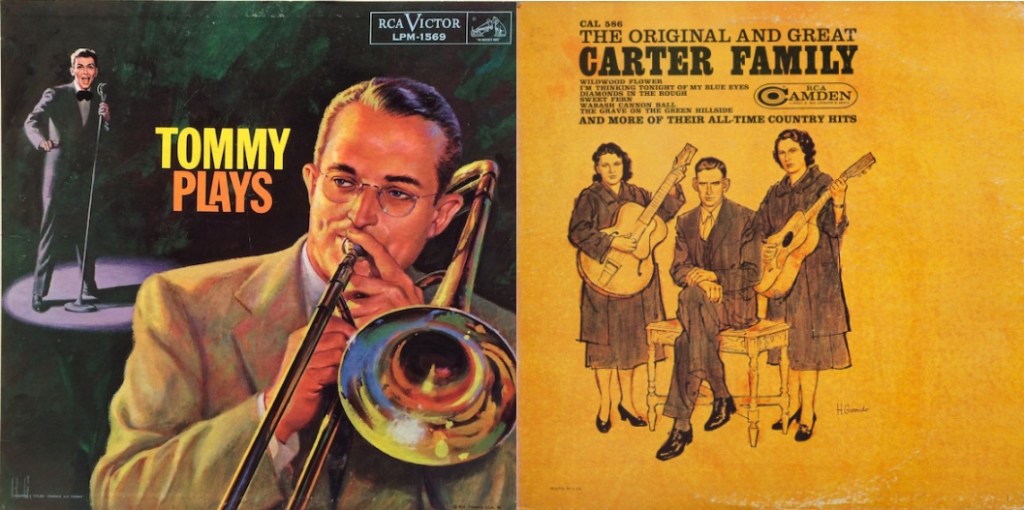
Discogs.com lists 10 album covers to his credit, though I wouldn’t be surprised if further uncredited ones exist. It spans big band, folk, and country, with a classical recording by Sergei Rachmaninoff thrown in.
Here are a pair of covers that stood out to me, both of which are compilation records, one by Frank Sinatra with the Tommy Dorsey Orchestra and the other by The Carter Family. Hector’s take on Tommy Plays-Frankie Sings I think is superior to the standard photo of Frank Sinatra used on most other covers of what was originally titled Frankie and Tommy, rightfully giving Tommy a place on the cover (and in primary focus, too!) The Carter Family drawing is more minimal and arguably drab, but I’d say suits their folk style quite well.
What Style of Music?
Hector passed away in 2020 at the age of 92, so my consideration here (as will be the case with others) is hypothetical.
Leaning into the entire action figure art sort of concept, I think anything led by a solo musician/singer or one that fronts a band in their name. While Garrido-influenced art would be doing the heavy lifting, even the musician could have some fun with it as they do the posing for their very on action figure. They could have a pained grimace and pose like Han Solo frozen in carbonite as he or she is trapped within the plastic bubble, pose in their best fighting stance, or they could hold a deadpan, soulless expression that a toy would often have. I’m a bit surprised that the 1997 hit-single “Barbie Girl” by Aqua didn’t take advantage of that doll’s classic box art in some form, but I suppose lawsuits from Mattel could have put any such plans out of reach.
Kevin Eastman and Peter Laird

What Are They Known For?
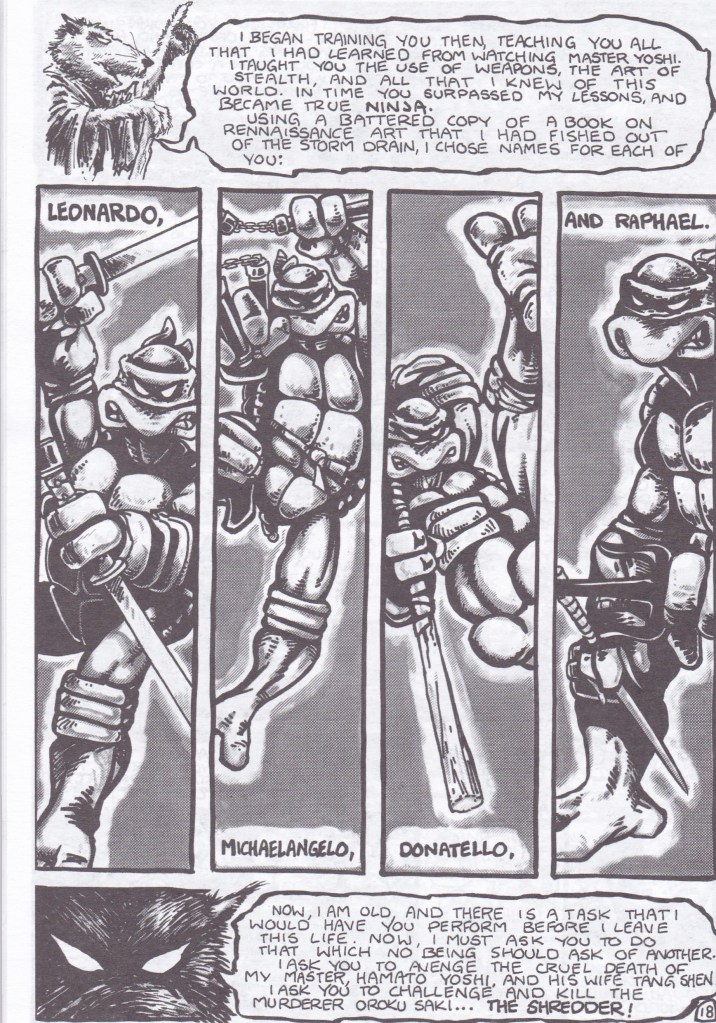
Eastman and Laird are the men behind the original concept and comic books of the Teenage Mutant Ninja Turtles. Their gritty, Frank Miller-inspired style was not what boys and girls my age would have been introduced to in the Fred Wolf Films-produced cartoon show (my recent morning consumption of that series on DVD is what put the Turtles on my mind lately). The Turtles’ earliest stories through Mirage Comics were a black-and-white affair, with no easy way to tell the difference between each of them aside from the weapons they brandished (their masks were typically red on the covers rather than each having their signature colours).
Here’s a sample from the very-first TMNT issue from May 1984, revealing how Master Splinter named each of the four turtles.
Have They Done Album Covers Before?
Eastman has at least a few known music works, some of which were photography within the liner notes of albums. A few of these projects relate to his work with the Heavy Metal magazine and extended franchise, some of which he did in collaboration with his then-wife, actress Julie Strain (star of Heavy Metal 2000). Laird’s contributions seem to be limited to various TMNT-related products, for which Eastman also received credit.
What Style of Music?
I’m thinking of a few things. Crossover thrash metal along the lines of D.R.I. or Suicidal Tendencies makes plenty of sense for men that conceived turtles that were often tied to a west coast sort of skater/surfer manner of speaking (particularly the slang used by Michaelangelo). Experimental electronic music, industrial, or forms of “noise” music ranging from Aphex Twin to Controlled Bleeding to Painkiller, with raw, machine-like elements could work well with a gritty art style.
They could turn a musician or band into comic book characters or try their hand at something new altogether like a band mascot. I’d like them to stick to the black and white of their TMNT interiors. It worked well enough for iconic covers like Sonic Youth’s Goo, so don’t shy away from it!
The Mars Attacks Team
What Are They Known For?
Before it became a movie in 1996, Mars Attacks began as a trading card set released by Topps back in 1962. It was an innovative method of storytelling to show what an alien invasion might look like not through the typical means of a comic book (where much of the creative team had experience in) or a science-fiction B-movie, but through a collectible 55-part story. Limiting one image for a particular card meant those involved had to be economic and calculated with both the front imagery and the descriptive text on the card backs. In book terms, each was essentially a condensed chapter of an epic story.
Here’s one of my favourites from the set to illustrate the effort put into the both fronts and backs. It happens to be one of the least gory and more humanizing of the cards, so if you want to risk being grossed out, have a scroll through the entire set.
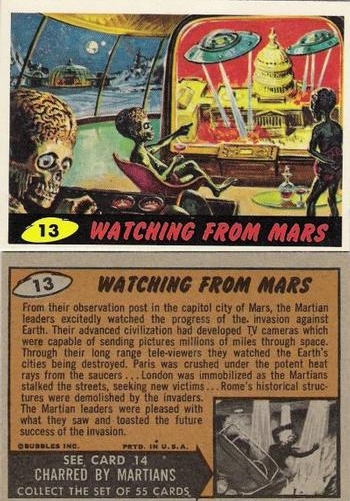
The cards are among the priciest out there for ones not depicting athletes on them, so you can always do what I did and purchase the hard-cover 50th Anniversary book (housed in a jacket resembling the wrapper that the cards were initially issued with). As for the team responsible, Woody Gelman (one of the cards’ co-creators) made some other big pop-culture contributions in his day in helping create classic food mascots Popsicle Pete and Bazooka Joe. Len Brown was the story author/co-creator, and is also known for co-creating T.H.U.N.D.E.R. Agents with another Mars Attacks collaborator, Wallace ‘Wally’ Wood. Wood himself is a legend in the comics industry. On top of providing several sketches for the concepts used in this series, he had worked on the earliest issues of Daredevil and several lines from the EC Comics label. Norman Saunders, the cards’ painter, also created many pulp magazine and novel covers as well as working with Topps on other cards like Wacky Packages. Bob Powell, who was responsible for some of the final pencil art, worked going back to the Golden Age of comic books and on titles such as Mystery Men Comics, Jumbo Comics, and Cave Girl.
Have They Done Album Covers Before?
There really isn’t much, if anything, from what I can tell. The only major team member of these cards that I’ve seen album covers from was Wally Wood, but they looked largely to be compilation albums that slapped some of his old work on their (possibly without permission).
If we are to extend the search to those that contributed to the 1994 second series of Mars Attacks, Herb Trimpe and Earl Norem don’t appear to have any music-related contributions either. To extend this connection further, a similar series was produced by Topps titled Dinosaurs Attack!, which had significant overlap of staff to the more-modern Mars Attacks cards (including Trimpe and Norem). Paul Mavrides did art on the Dinosaurs Attack! sticker inserts, so he appears to be the closest link to someone of the team creating customized images for album covers, with his portfolio including the cover of Electriclarryland by The Butthole Surfers.

Most of the Mars Attacks originators are no longer with us, so it would be worthwhile branching out and investigating some of the extended family employed by Topps or other trading card manufacturers.
What Style of Music?
I think trading cards would make a magnificent tie-in to an album!
Could you imagine a band making a concept album where the story is captured on trading cards? The closest I’ve seen to that was what The Ocean did for Heliocentric (which I touched on briefly in a post last year). Musicians in a variety of genres have released conceptual albums, as this Rolling Stone article on the subject can attest, so there are many out there that could consider this idea. Still, I tend to think along the lines of progressive rock music or metal, but it can go beyond that. As for the cover an artist could choose to go with, either take the best image of the card set or pick a captivating image that best represents the story.
The Artists of Dungeons & Dragons
What Are They Known For?
No need to echo it. I’ve actually owned a D&D Starter Set for the longest time, and it was the art on the box that really sold me on it. It never launched me into full-blown D&D enthusiast mode, but it made me gain a stronger interest in fantasy, sword and sorcery artwork.
About a month ago, I ordered an assortment of trading cards on the internet, and that included a selection of 1991 and 1992 TSR Advanced Dungeons and Dragons ones. I deliberately hand-picked the ones I deemed to have the most interesting characters, though I admit I left plenty of good ones behind. My choice of two of these cards, characters that were labelled as Averill and Guntar Griswold on their cards, I recognized from a source I was already familiar with, the cover of the Sega Genesis game Dungeons & Dragons: Warriors of the Eternal Sun.

I had to look through a mass of online galleries as it seems these character names applied to the cards and not necessarily the original images in which they appeared. This cover, it turns out, was created by Clyde Caldwell, who made a great assortment of imagery for the table-top game franchise. This particular painting is titled “The Dragon’s Lair,” and looks much more impressive when it’s not cropped to fit a video game box.
In an effort to give more D&D artists some credit, I decided to pull three other of my favourite cards that I picked up to assist me in finding whose style I liked the best. I wasn’t intentionally choosing ones that came from different campaign settings, but they coincidentally are, with Forgotten Realms and SpellJammer also gaining representation.
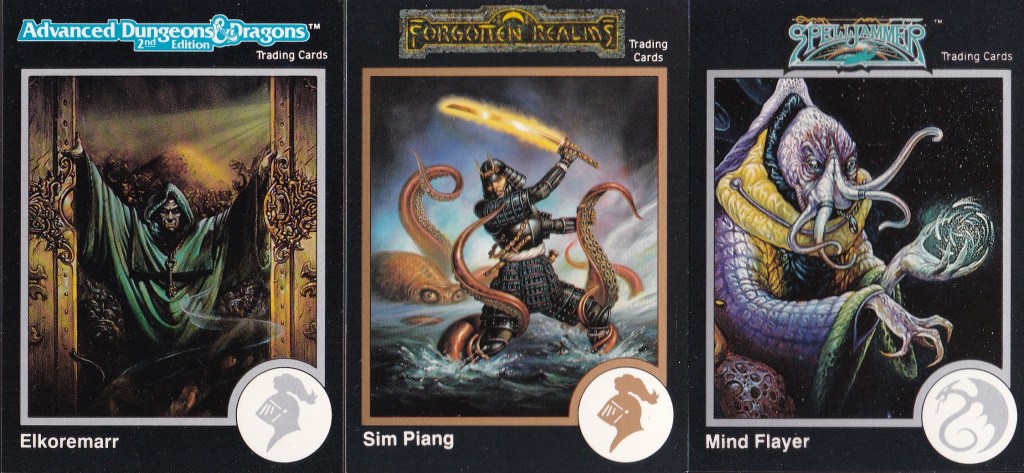
It turns out that Caldwell did the art on the Sim Piang card, which was a painting of his titled “Blade of the Young Samurai.” The other two cards’ art was handled by Jeff Easley. The Elkoremarr character is taken from a painting called “Abandon Hope,” whose title I assume his cards’ description was derived. Expecting to return home from his tower in one piece is like expecting to find more than three raisins in your first pour of Raisin Bran cereal. The Mind Flayer is the right-most character in the painting “Adventures in Space.” I don’t mind the cropping this time around because he is hands down the coolest-looking of the characters, and he must know it if he truly does view himself as being of a “superior race.”
So many great visual artists have contributed to the D&D universe and brand that I could do an entire post about them alone. I’ll leave the focus on these two, and perhaps feature more of them in the future.
Have They Done Album Covers Before?
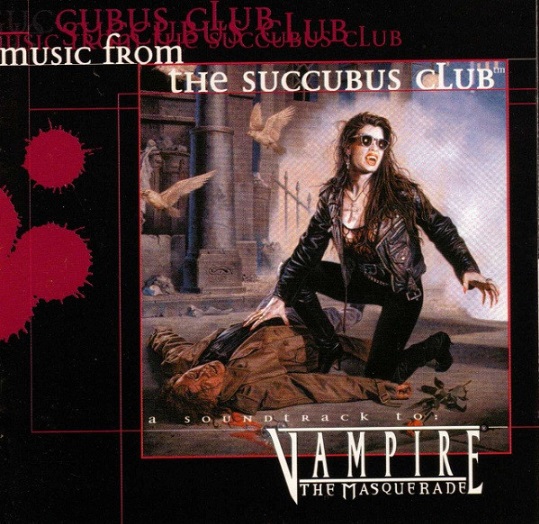
Caldwell has at least six credited to him, though two appear to be potentially bootleg Chinese pop mix-tapes that don’t make the best use of his art due to poor image resolution. The album Money Machine by Bigelf uses his image of a giant metallic robot-like creature destroying a castle on the back cover, but I’d prefer to have Clyde’s art front and centre. Another cassette album, Gold Box Renditions by Synth Bard , has Chiptune music housed in art that mirrors a D&D video game box in an interesting fashion. I nominate the use of his painting “To Pick A Rose, You Ask Your Hands To Bleed” on the soundtrack to the role-playing tabletop game Vampire: The Masquerade as the best use of his art. It looks to be a date gone bad, for one of them anyway!
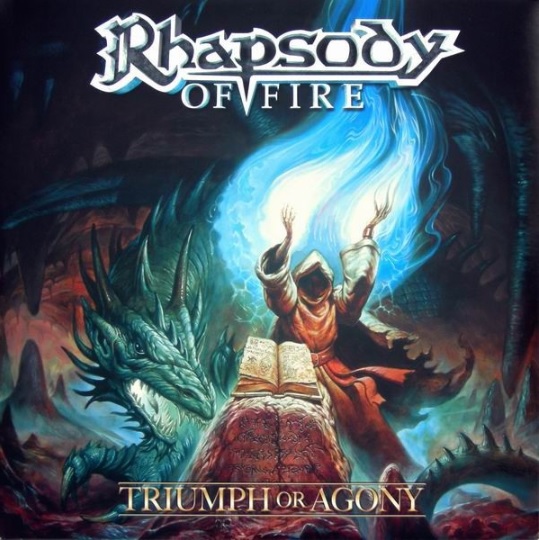
Easley also has at least six different music releases that use his image. Given that all but one of these come from very small independent labels, I’m assuming many of these are used without permission (correct me if I’m wrong). The other is from a rather popular power metal band, Rhapsody of Fire, and their first studio album under their new name (they were previously just Rhapsody), Triumph or Agony. Not sure if the hooded humanoid had cast a spell to summon the dragon or if the dragon arrived to thwart whatever is about to transpire, but it’s exactly the sort of thing you’d want for a cover when settling on a fantasy visual artist.
What Style of Music?
This one seems too obvious, but why not power metal? Play to the illustrators’ strengths. It may be embracing a cliché rather tightly, but if it’s done with a damn fine painting slapped on the front, what’s the issue? Traditional metal works too, where you occasionally have Ronnie James Dio-fronted projects called “D&D metal” given his occasional use of dragons and other medieval-based concepts as lyric metaphors.
 Armchair Maestro
One thought on “Please Make My Album Cover! (Part 2)”