

As a music lover, one frustrating part about watching TV shows is that many do not list song credits at the end of each episode. What are your options if you happen to catch a great song? Well, you can either hold your phone up and use Google (or a different app) to identify the source of the audio, or you can look it up yourself.
The internet is a place that can either unite or divide us. Treat it like a resource and toolbox while steering clear of social media bickering, and you can learn to love it for the knowledge it can provide. Some such tools I’ve been enjoying in recent years are Tune Find and What-Song, sites where you can look up practically any TV show or movie and get a list of songs that appeared in its respective soundtrack. Additionally, you can look up musical artists to find their various movie or TV appearances. You can alternately use IMDB, but a combination of these resources (and others) would likely be required for a more obscure show, film, band, or song. One of the first shows that pushed me to dig deeply onto the internet to find out more about its soundtrack was The Sopranos.
The Sopranos debuted on January 10, 1999. As I was just 13 at that point and did not have access to HBO, I only knew of the show from the odd pop culture reference I’d pick up in the years that followed (Harvey Birdman, Attorney at Law’s parody of the show’s intro comes to mind). I waited and waited, developing a taste for movies like Goodfellas and The Godfather before I finally invested some time and money into this show maybe… fourteen years ago?? I can’t pinpoint when exactly it was, but the show nonetheless helped strengthen my appreciation for song selections within a television show. Sometimes it takes the oddest thing to turn you on to a song, band, or even a while genre of music. Who could imagine a mobster..err.. a man who works in sanitation, could teach me a thing or two about music? That’s not what I expected. In fact, I never expect any TV show to be a good place to find great tunes, but it happens pretty darn frequently, and with less and less effort as I age.
When it comes to choosing music for the show, it comes last, according to show creator/head writer/executive producer David Chase. That’s not that much of a shock, especially if you have someone compose a score. Besides,it’s got to be very rare that a soundtrack comes first, and writers and actors work around it. To go with a soundtrack of pre-existing songs rather than make use of scores, Chase points to the Martin Scorcese film Mean Streets as inspiration. I honestly couldn’t imagine the series without the wide range of songs that it integrates into each episode. It often works magnificently, never distracting from the drama. To thank for this, we have producer Martin Bruestle, music editor Kathryn Dayak, and the occasional guidance of Steven Van Zandt (a.k.a. Silvio Dante). For further detail, I recommend watching this The Music of the Sopranos feature with interviews conducted by Rolling Stone managing editor Will Dana.
It’s been a good two or so years since making my way through the entire series for a second time, with the discovery of a Sopranos parody on the kids show Arthur (and, more importantly, the recent passing of actor Vincent Pastore) reminding me that I’d better get my butt in gear and finish this topic up (forgive my procrastination!). If my memories of certain story lines I discuss deviate from reality, then that could indicate that I’m due for a third watch of the series.
A decent percentage of the songs used in The Sopranos I knew before watching the show, and in some cases would get added pleasure when they’d go with lesser-known songs of established bands (“Thru and Thru” by The Rolling Stones comes to mind). As much as I love music, I’m no music encyclopedia, so am taken aback when the right song crosses my ears in an unexpected setting. When I last went through the series, I made note of particular songs that grabbed my attention. Below, I’ll highlight five songs that either drove my curiousity in some fashion or that I believe worked particularly well. I’ll do my best not to spoil any major moments from the TV series (or at least ones I don’t consider to be major), but in reality, that shouldn’t matter much since the show debuted in the previous century.
That said, two of my selections happened to be in this ScreenRant article about perfect song choices in the series, so there’s a bit of a spoiler I couldn’t resist.
“Tiny Tears” by Tindersticks
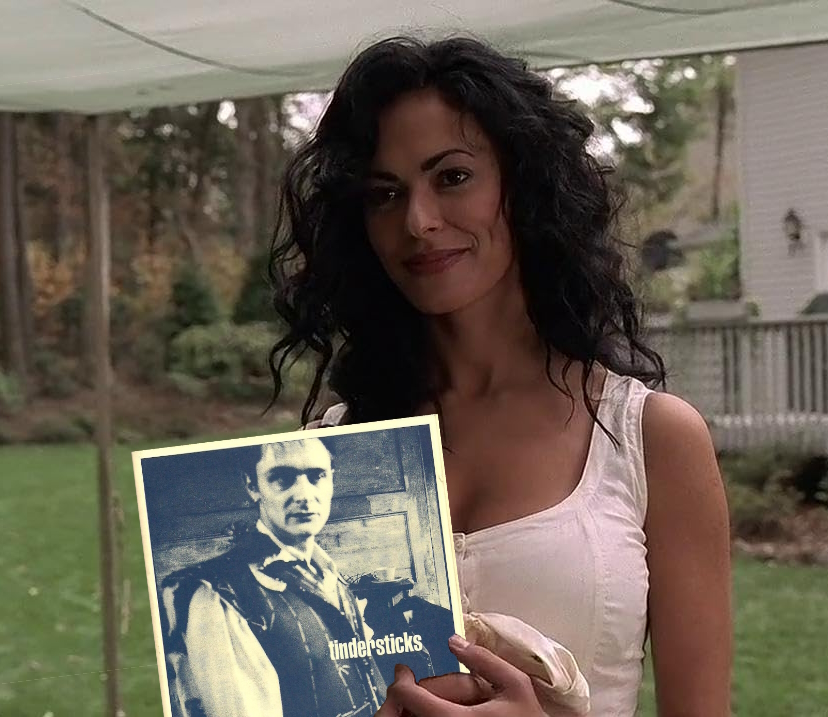
Italian actress Maria Grazia Cucinotta played the titular character in the twelfth episode of season one “Isabella”. Isabella is an exchange student staying next door to the Soprano family, and her and Tony start to spend a good deal of time together. Her character happens to be one of the seemingly few attractive women to cross Tony Soprano’s path that he doesn’t have sexual relations with, for reasons which are explored in therapy between Tony and Dr. Melfi. His struggles with depression have his encounters with Isabella become a bright spot in his day, and who can blame him? At greater depth of research, it should have come as no surprise to me that such a breath-taking woman appeared in the Bond film The World Is Not Enough. I knew that I knew her from something else!
“Tiny Tears”, a brooding, dark, and intense yet oddly romantic song, plays at some point during the episode. I can’t recall a specific moment that it does come on, but I believe it may have played more than once in the episode. A powerful, deep vocal delivery by Stuart A. Staples puts out a similar vibe to what pulled me towards Nick Cave and the Bad Seeds. The band even did some soundtrack work of their own, providing original music for the 2001 film Trouble Every Day.
Tindersticks makes for a good jumping off point for a variety of artists. Not only do you have Stuart A. Staples’ extensive solo career, but other members past and present have some noteworthy music they’ve also helped to create. Violinist Dickon Hinchcliffe has scored many films including Winter’s Bone, Locke, and Leave No Trace. Keyboardist David Boulter also has a heavy hand in soundtrack work (with Tinnitus and Five Nights in Maine among them) to go along with other solo projects. Drummer Earl Harvin has over 250 recording credits that features the likes of Jeff Beck, My Brightest Diamond, Seal, and the recently departed Glen Hansard on top of his own jazz albums. It’s like playing the Six Degrees of Kevin Bacon game when you explore all the connections these guys have!
I’ve got to explore these branches of the Tindersticks family tree myself, and learning that the band’s “Running Wild (Extended Instrumental)” was used during show’s final season makes it all the more evident that I still need to dive deeper into Tindersticks’ own discography.
“Living On A Thin Line” by The Kinks
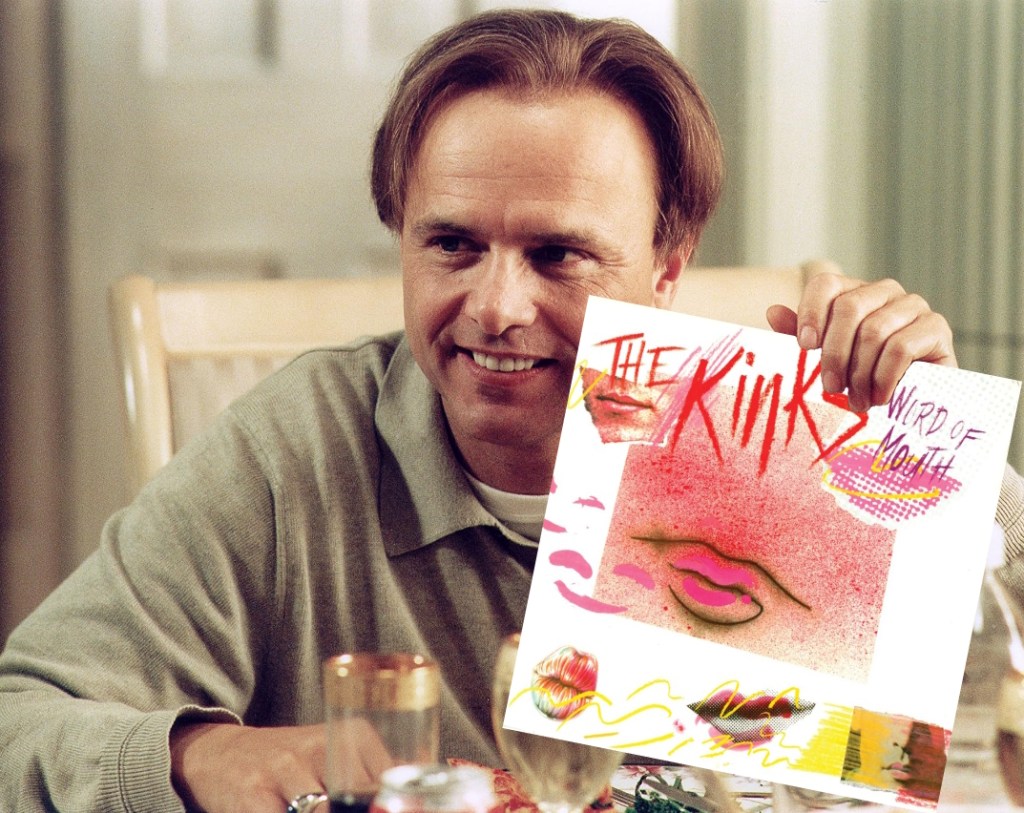
This song was featured in “University”, which is the sixth episode of Season Three. The use of the song in focus was not part of the story line from where the episode derived it’s title, which was for a school-based plot involving Tony Soprano’s daughter Meadow, but was used within a concurrent story that is perhaps even better remembered by fans of the show.
The episode features a one-off character, Tracee, who is one of Sylvio Dante’s dancers at his Bada Bing nightclub. She gets involved in a relationship with a volatile character that many viewers love to hate named Ralph Ciferello, who is becoming a major player in Tony Soprano’s crew. To say the least, things don’t go very well between Ralph and Tracee by the end of the episode, making for a further knock against Ralph in the eyes of Tony. It’s a deeply sad story, with Tracee portrayed memorably by Ariel Kiley, with her character unfortunately in a bad environment to seek out any guidance and a potential father figure she desperately needs.
“Living on a Thin Line” served as an unofficial anthem or theme for Tracee. Lyrically, the title itself you could easily draw parallels to her character. I’m not sure about the rest of the words, with a surface-level lyrical analysis pointing to the changing times in England or perhaps how they really haven’t changed at all. It also isn’t typical of a song I would associate with a strip club or stripper, but you see plenty of the adult establishment in other episodes where you can get your more typical, groove-oriented classic rock cuts (think “Pour Some Sugar On Me” or “Stranglehold”). Maybe its usage while she danced could illustrate that Tracee doesn’t really fit in the environment at all, though I suppose workers aren’t required by contract to dance to hair metal.
The song is much more delicate in nature than what I was used to hearing from The Kinks. In fact, I know I’d heard the song previously to my watching this episode, but never made the association as a Kinks song. I knew the band best from their classic rock staples “You Really Got Me” and “Lola”, and I also had their nineteenth studio album Give The People What They Want in my record collection. The slight deviation from the norm of their material made me never connect this song to The Kinks, and there’s still a mountain of their singles I’ve yet to be acquainted with, so further surprises may be in store for me.
While I’ve heard the song on the radio, I’m somewhat surprised the song had little success on the charts, going uncharted in the UK singles and Billboard Top 100 charts and number 24 on the Billboard US Mainstream Rock charts in March 1985. Did The Sopranos ever give this a boost in popularity? Having missed out on the show during the initial run, I’m not sure if it had that power like certain programs of more modern times seem to have (such as Stranger Things), but the lasting legacy of the program shows the long game was in effect.
“Space Invader” by The Pretenders
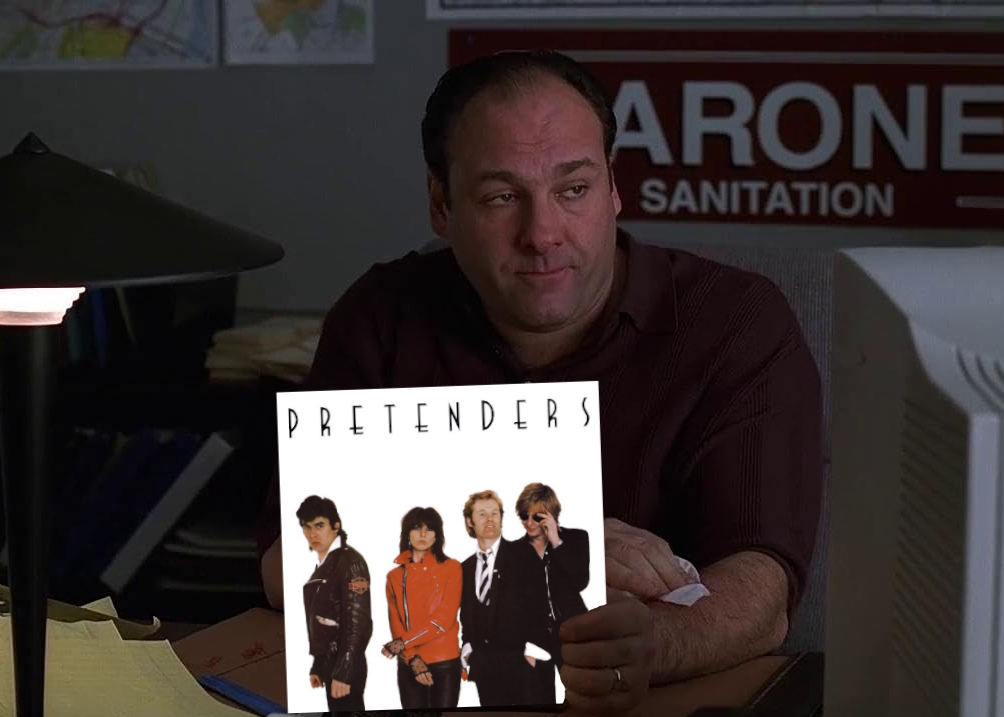
How did this relative deep-cut from The Pretenders’ debut album fit into the fabric of the show?
It began as the episode began, with garbage dumped into a parking lot. It really is a basic way to get the ball rolling on their eleventh episode of the second season, “House Arrest”. The waste spillage had to do with some dispute or disruption with sanitation services, and the episode actually involved Tony Soprano putting in some face-time at Barone Sanitation to cool potential heat around the crew’s organized crime activities. That’s not that important. Actually it is, but the song that played as the refuse intentionally missed its standard destination nonetheless took me out of the moment at the time.
“Space Invader” is a perfect title of a track for the on-screen situation, playing well with the victim’s angered reaction to the predicament that faces him, but I had no idea what the band was when I watched the scene. My brother and I were doing our best to guess the artist. I can’t remember what bands I suggested, but he had thought Fleetwood Mac was a possibility. We may have been expecting a vocal to pop in to make our guessing game somewhat simpler, but one never came.
Chrissie Hynde has such a distinctly unique rock voice, but learning of this vocal-less track intrigued me to the point of wanting to have more than just a casual familiarity with The Pretenders.
This instrumental, the first of the album’s two tracks that Hynde did not write or co-write (the other being Ray Davies’ “Stop Your Sobbing” from the Kinks’ first album), was co-written by bassist Pete Farndon and guitarist James Honeyman-Scott. This band would face some serious tragedy early on in their career, in particular with both of this song’s writers. Both men would meet their unfortunate demise within two years of the release of their second album, Pretenders II, both tied to their respective drug habits. While the band would ultimately become Hynde’s baby entirely, it’s one of those “what if” cases in rock music to ponder what could have happened if both Farndon (who was fired from the Pretenders in 1982) and Honeyman-Scott could have kicked their habits and become more consistent contributors to the band’s sound.
Though Honeyman-Scott notably co-wrote perhaps their best-known track “Brass In Pocket”, “Space Invader” is the one case in the band’s catalog where both him and Farndon share a writing credit.
An infectious bass riff with the right splash of colour from the guitars (not to mention some great sounding drums) for a relatively simple instrumental shows that you don’t need to have the technicality of the Dream Theaters or Racer Xs of the world to mute the vocalist’s mic for a track. Could there have been more songs in the vein of “Space Invader” in the Pretenders’ future?
They didn’t necessarily need them, but it would have been interesting.
Not exactly plucked from obscurity by the song selection committee of The Sopranos staff, as “Space Invader” was a 1980 Grammy nominee for Best Rock Instrumental Performance, put up against The Police’s “Regatta De Blanc”, The Dixie Dregs’ Dregs of the Earth album, Emerson Lake and Palmer’s “Peter Gunn”, and Jean-Luc Ponty’s “Beach Girl” (The Police were the winner). I’m sure it was an honour to just be nominated, as the saying goes, much like one would say when their song is selected for inclusion in such a critically-acclaimed television series.
“Seven Souls” by Material
Book-ending “Members Only”, the first episode of the sixth and final season of The Sopranos, was this unorthodox, hypnotic number by Material. Of note, there are a few variations of this track out there. You’ve got the ten-minute cut from the album Seven Souls that I linked to above, and the nearly half-as-long version from The Road to Western Lands that’s credited to William S. Burroughs and Bill Laswell. My assumption is that it was the first of these used as that’s the one that TuneFind links to, but too much time has passed since I’ve watch the episode to verify with my own ears.
The track plays initially while the viewer is being brought up to speed via a montage on what has happened in between seasons in the lives of many key characters, which I believe was to bridge a nearly two-year gap. Scenes of Soprano capo Vito Spatafore posing for one of those corny weight loss photos in loose-fitting pants and Janice (Tony’s sister) taking care of her baby daughter were among the depicted events I can recall that say the least of the plot points that weave through the series. I’m not sure if there’s any deep connection that can be found between the spoken words in the track (see lyrics here) and what’s happening in this sequence, but it’s a good match regardless. Could a variety of songs had worked in this sequence? I’m sure that’s the case, but this one nonetheless feels right.
This is the one case here where I actually had a pretty good instinct as to who the artist was, but I still didn’t place it immediately. On my last watch of the episode, my brother guessed David Lynch was doing the spoken word part. The voice is somewhat similar, and we’d become accustomed to the film director’s involvement in music through his own film projects and guesting in places like the Flying Lotus track “Fire Is Coming”. I actually did previously hear Burroughs on the Material track “Words of Advice” off their Hallucination Engine album, which you thought would have helped me figure this out with greater velocity, but it did not. By the end of the episode, I believe I figured it out.
Material, like Tindersticks, serves as an interesting jumping-off point in terms of musical discovery. Founded in 1979, the two most prominent members of their founding lineup were Bill Laswell and Michael Beinhorn. By the time “Seven Souls” was released in 1989, the project was solely Laswell’s with a myriad of guests. Tracks on that album feature such names as Jah Wobble (ex-Public Image Ltd. on top of a lengthy solo career), DJ Spooky (whose numerous collaborators have included Dave Lombardo, Merzbow, and Lee “Scratch” Perry), and Sly Dunbar (Sly and Robbie, Black Uhuru). At least two additional names should stand out to those that follow Laswell’s career. Nicky Skopelitis, one of the album’s credited guitarist, is perhaps one of the more overlooked six-stringers out there. A frequent Laswell collaborator, he can be heard on recordings by the likes of Ginger Baker, Sonny Sharrock, and Iggy Pop. Violinist L. Shankar also features on the recording, who has hundreds of credits including playing with musicians as diverse as Archie Shepp, Echo & The Bunnymen, Lou Reed, and Jonathan Davis.
In the past year, I’ve further added to my Laswell collection, having since picked up Massacre’s Killing Time album and Curlew’s self-titled debut. Laswell alone is a treasure trove for hip and experimental underground music from the ‘80s “no-wave” scene out of New York City. Of course, Burroughs could also take you down a rabbit hole from a literary perspective (he most famously authored Naked Lunch), but the music lovers may also want to hear more of him. He can be heard with collaborative partners inclusive of Tom Waits, Laurie Anderson, and Ministry.
“The Three Bells” by The Browns
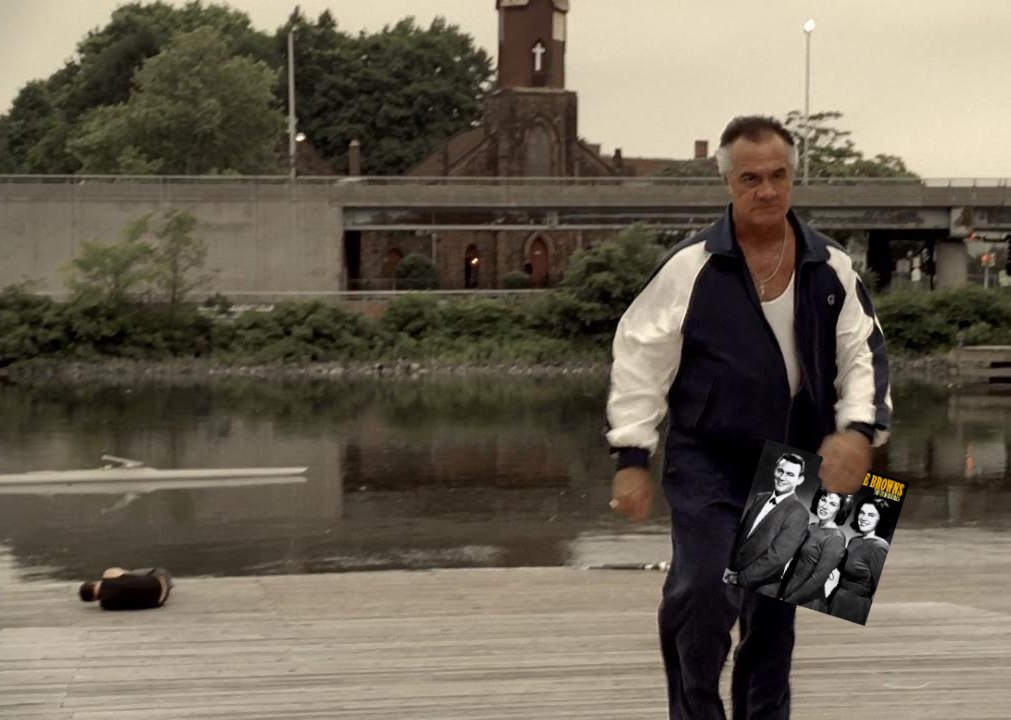
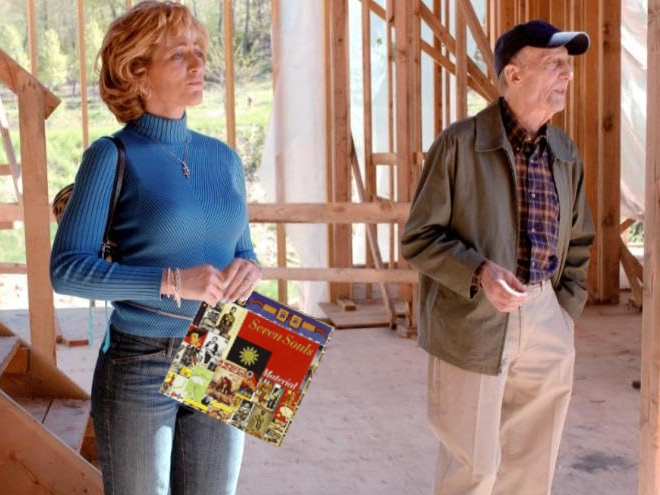
This was from the episode “The Fleshy Part of The Thigh”, the fourth episode of the show’s sixth and final season. Since my last watch, my memories of this episode has faded somewhat, but the bottom line is that one of the story lines involved Soprano associate Peter Paul “Paulie Walnuts” Gualtieri intimidating and beating up a young man (Jason Barone, who had just inherited his father’s sanitation business), as shown in the above photo. The album in Paulie’s hands is a photo edit I made, in case you haven’t caught on to my efforts by now, but it would have been quite the spectacle seeing him using a record as a weapon. Rather than the exact purpose of the beating, I mostly remember that the depicted victim was played by Chris Diamantopoulos, who I’d grown to since admire for his role as Russ Hanneman (the “Tres Comas” investor) in Silicon Valley.
The A-plot of the story centers around Tony Soprano’s current stay at a hospital, but part of what has been weighing on Paulie’s mind during the above scene also relates to health issues within his own family. His aunt had confessed on her deathbed that she is actually his biological mother, and she gave him up in secret as she was a nun and such a birth would disgrace her. He did not handle this news very well at all, and had great difficulty coming to terms with it.
At some stage during the aforementioned beating scene, the song by The Browns was playing. The main part of this one that stood out was the contrast. Who in their right mind would associate this song with such disorderly conduct? That’s the beauty of the song’s inclusion here. Paulie is always an enjoyable character to watch in how his mood can turn on a dime, possibly more so than Tony in that aspect despite his short temper. If I do some math on this one, with “The Three Bells” having been released in 1959, that would place the actor portraying Paulie, Tony Sirico, at around 17 years old when the song debuted. The character of Paulie has a peaked in high school energy, and I imagine this single to have been something he’d have playing in his glory days. Either his effectiveness in playing the muscle was bringing him spiritually back to his youth or his recent reflecting back on his upbringing has him reverting to dwell on something more consistently positive about the past, that being the great music of the Fifties. Yes, I realize I’m probably severely overthinking this song selection.
The Browns happen to be only group mentioned here that I’ve yet to purchase any music from. What’s stopping me? I don’t know. It’s for no reason in particular, because I happen to enjoy ‘50s and ‘60s folk and country despite it also being a small percentage of my collection. The song isn’t one that I would normally seek out, but I’m often very moved by vocal groups when I catch them in older movies or TV shows. A good example of that would be the multi-talented Andrews Sisters, whom I’m mostly familiar through their appearances in Abbott and Costello films. On the album the song originally appeared (Sweet Sounds of The Browns), I recognize some noteworthy musicians in the lineup, particularly guitarist Chet Atkins and pianist Floyd Cramer. Between The Browns and those two musicians alone, that gives room for plenty of music exploration.
—
The above selections are but a very narrow sample of what the show’s soundtrack had to offer. I’d love to hear if there were any songs The Sopranos used that you felt particularly attached to, so I’ll invite you to continue the discussion in the comments.

